
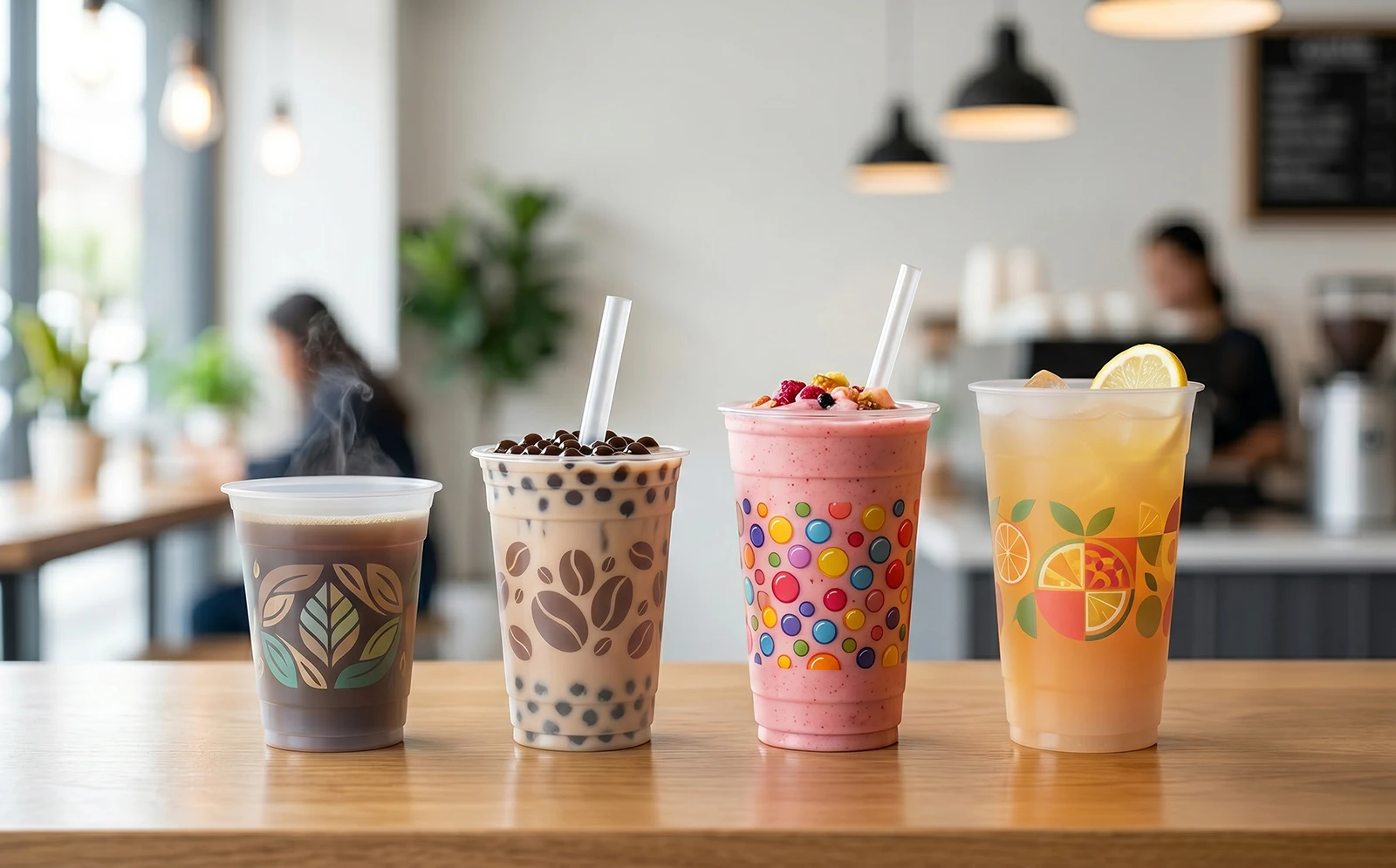
Custom printed pp cups feature high-definition corporate graphics applied via offset, flexographic, or UV screen printing processes, helping businesses establish brand identity directly on food-grade beverage packaging. These specialized manufacturing methods maintain ink adhesion and color accuracy under diverse temperature conditions, aligning marketing objectives with operational safety.
Procurement managers at expanding beverage franchises or wholesale single-use supply firms often face strict presentation requirements from corporate branding teams. Standard clear containers fail to capture consumer attention in crowded retail markets, while poor ink choices can scratch off during transport or emit unpleasant odors. Balancing complex artwork details, plate setup fees, and Minimum Order Quantities (MOQs) requires a clear understanding of commercial printing technology. As explored in The Complete Guide to PP Cups: Types, Safety & Bulk Buying, customized surface treatments are an effective way to protect your brand equity while building long-term value into your packaging supply chains.
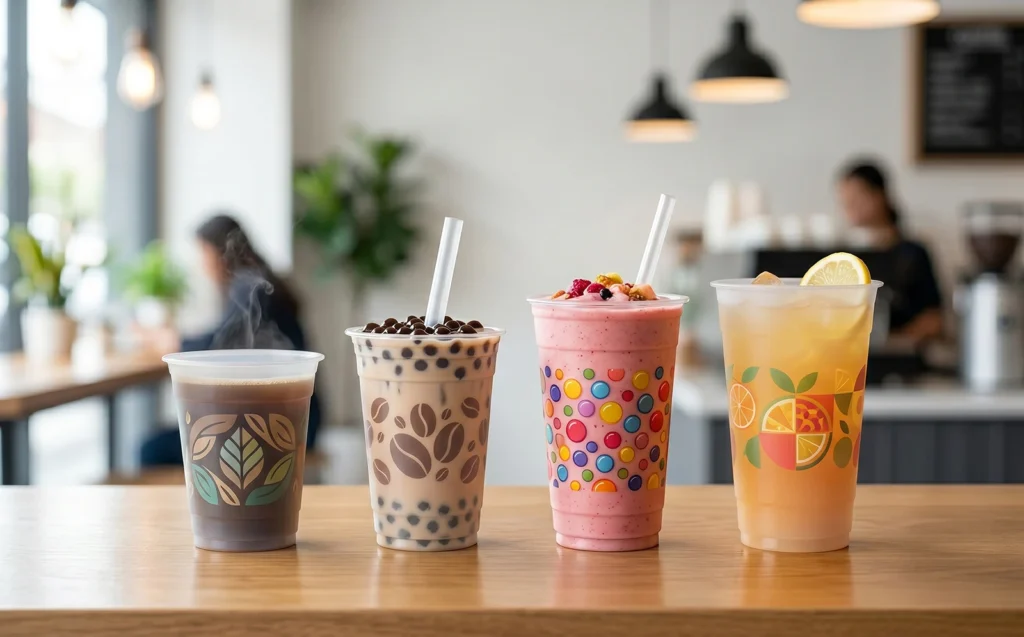
Which printing technologies match specific design complexities?
Industrial custom printing depends on three primary techniques—offset, flexo, and screen printing—each offering distinct advantages based on your color count and graphic complexity.
Choosing the proper manufacturing method prevents visual blurring and ensures your logos remain pristine during daily beverage service.
Offset Printing for Multicolored Graphics
Here is the deal. This process utilizes precise rubber cylinders to transfer ink onto the curved plastic surface with exceptional alignment accuracy.
- It delivers clean photographic reproductions and gradients.
- It handles complex designs featuring four or more distinct color layers seamlessly.
- The system utilizes thin ink applications that dry rapidly under manufacturing conditions.
- It requires unique metal plates for each graphic layout, which affects upfront tooling budgets.
Flexographic and Screen Printing Solutions
Think about it. Simpler logos or smaller batch runs require alternative mechanical setups to stay cost-effective.
- Flexo printing utilizes flexible photopolymer plates to transfer high-opacity inks quickly.
- It serves as the standard choice for continuous repeating patterns or bold solid backgrounds.
- Screen printing forces thick ink deposits through a structured mesh layer directly onto the plastic.
- It provides deep color saturation and textured finishes for premium seasonal promotional lines.
| Printing Method | Best Visual Application | Color Capacity | Setup Cost Structure |
| Offset Printing | Fine text, gradients, complex photos | 4 – 6 Spot Colors | Higher initial plate fees |
| Flexo Printing | Bold logos, repeating solid patterns | 1 – 4 Line Colors | Balanced block fees |
| Screen Printing | High-opacity textures, basic text | 1 – 2 Solid Colors | Low-cost screen prep |
Matching design files to the proper machinery eliminates production delays and maintains visual consistency across all cup capacities.
Key Takeaway: Specify offset machinery for intricate multi-colored brand assets, while reserving flexographic lines for high-volume, simplified corporate imagery.
How do plate fees and MOQs influence procurement costs?
Minimum Order Quantities (MOQs) typically start at 10,000 to 30,000 units per size because high-speed industrial presses require extensive material calibration before achieving perfect print registration.
Balancing upfront setup expenses against your warehouse storage capacities protects your operational cash flow from inflation.
Overcoming the initial plate fee barrier
It gets better. Every unique color in your vector artwork requires an independent printing plate manufactured before assembly lines can start.
- Tooling costs represent a one-time fixed investment for each design revision.
- Reorders that use identical artwork files do not incur additional plate setup fees.
- Simplifying corporate graphics down to one or two colors lowers initial cash requirements.
- Professional factories keep your physical plates secured in climate-controlled storage for future production runs.
Calculating the economics of industrial MOQs
Consider this. High-speed automated lines produce thousands of containers per hour, making short runs financially impractical due to machine startup waste.
- Startup waste during color calibration can consume hundreds of unprinted bases.
- Higher volume commitments lower the amortized unit price significantly.
- Standardized universal rim sizes allow you to mix cup heights while using identical lid sizes.
- Consolidating your annual demand into fewer production windows reduces overall freight overhead.
| Order Volume Tier | Average MOQ Range | Core Financial Impact |
| Trial / Promotional | 10,000 – 20,000 units | Higher unit cost; low storage impact |
| Standard Franchise | 30,000 – 50,000 units | Amortized setup costs; stable unit price |
| Regional Distributor | 100,000+ units | Lowest unit pricing; requires bulk storage |
Managing these cost variables helps logistics managers plan seasonal marketing rollouts without creating inventory imbalances.
Key Takeaway: Anticipate higher initial investments for your first customized production run, then maximize profitability by leveraging identical plates on subsequent reorders.
What compliance standards apply to customized packaging inks?
Customized packaging inks must meet strict food-safety standards, utilizing low-migration, heavy-metal-free formulas that prevent chemical contamination through the container walls.
Verifying raw chemical certifications protects your consumers from accidental exposure to volatile organic compounds (VOCs).
Eliminating toxic metals and odors
Moving forward. Traditional industrial pigments can contain traces of lead or cadmium, which are strictly prohibited in direct food contact scenarios.
- Specify food-grade, soy-based or water-soluble inks for all exterior print runs.
- Ensure all drying procedures utilize clean UV-curing technology to lock pigments instantly.
- Monitor residual odor metrics to ensure ink fumes do not alter beverage flavor profiles.
- Verify compliance with international chemical restriction frameworks like European REACH protocols.
Preventing offset migration inside stacked inventory
You should know. Nested packaging puts the printed exterior of one cup in direct contact with the clean interior lining of the container beneath it.
- High-performance inks must resist transfer when nested under heavy warehouse stacking pressure.
- Advanced curing zones dry the printed designs completely before the cups reach packaging stations.
- Smooth material surface tensions prevent ink flaking when cups are separated during busy service hours.
- Routine rub tests confirm graphic stability against high humidity and condensation exposure.
| Compliance Factor | Safety Standard Requirement | Practical Verification Method |
| Heavy Metals | Zero lead, cadmium, or mercury content | Independent ICP-MS laboratory testing |
| Migration Risk | Strict conformity with FDA 21 CFR rules | Simulated chemical extraction audits |
| Ink Adhesion | No flaking under freezing or steam exposure | Standardized tape-pull and condensation tests |
Enforcing clear chemical guidelines protects your distribution networks from expensive safety recalls and regulatory fines.
Key Takeaway: Request certified laboratory verification for all manufacturing pigments to ensure your custom-branded packaging remains safe during transport and storage.
Conclusion
Developing custom-branded packaging requires a manufacturing partner who balances clean graphic execution with strict chemical compliance. Reliancepak provides fully integrated printing and manufacturing services, operating nine advanced production lines to deliver consistent quality and reliable delivery timelines. We suggest contacting our corporate team at admin@bereliance.com or visiting www.reliancepak.com to request free printed samples and review our structural customization choices for your inventory.
Our vision is to help global food and beverage brands scale efficiently through technical manufacturing precision, clear compliance documentation, and stable B2B supply partnerships.
Frequently Asked Questions
Can I print full-bleed metallic colors on clear containers?
No, generally speaking. While special metallic spot colors are available for high-end branding, full-bleed solid designs can compromise container transparency and require specialized UV-drying configurations to maintain adhesion.
What digital file format should I submit for custom production?
You should submit high-resolution vector artwork files in AI, EPS, or PDF formats with all text layers converted to outlines to ensure clean color separations during plate manufacturing.
Do changes to text size require entirely new printing plates?
Yes. Any physical modification to the layout, font size, or positioning requires the manufacturing of a new plate, as the design is permanently etched into the printing block.
Are eco-friendly water-based inks as durable as solvent inks?
Yes. Modern food-grade water-based and UV-curable inks provide excellent rub resistance and vibrant coloration that easily withstand condensation and temperature variations without bleeding.
Can I mix different cup sizes within a single print MOQ?
Yes, provided the manufacturer operates flexible printing setups. However, if the cup diameters change, separate plate sets will still be required for each unique container profile.